Work in Progress: Implementing the VRA
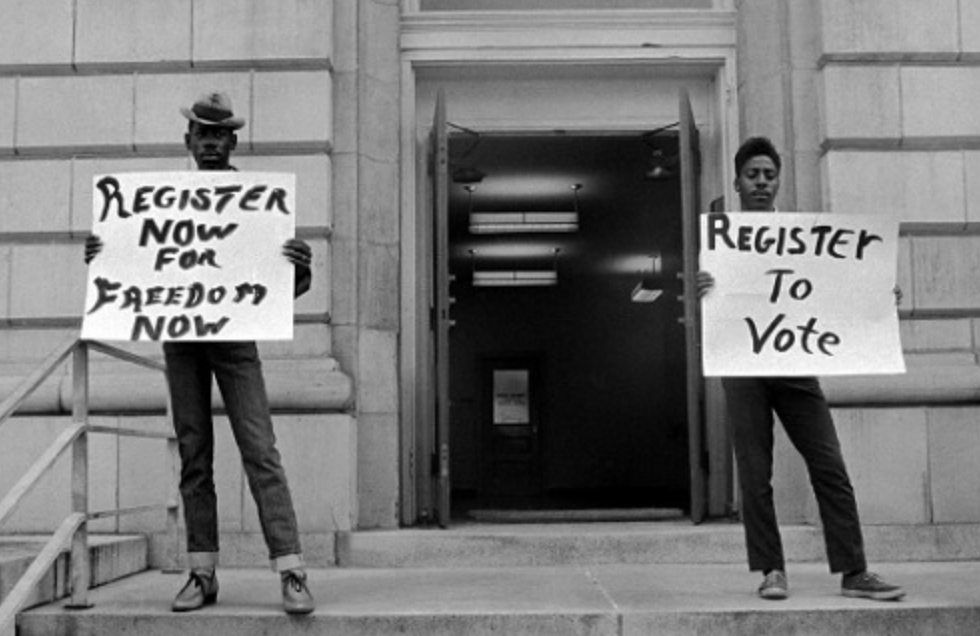
Work in Progress is a recurring feature on CAMPAIGN TRAILS, in which I share some of the more interesting materials I’ve uncovered in my book-in-progress on the work of John Doar and the Civil Rights Division in the 1960s.
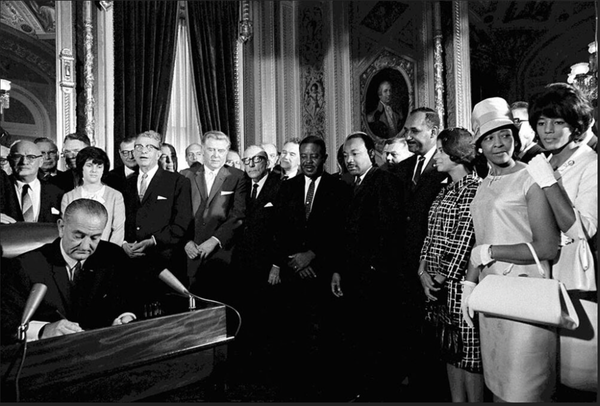
As I noted a couple days ago, when the Voting Rights Act was signed into law in August 1965, it set off a flurry of activity within the Civil Rights Division and the Department of Justice as a whole.
In the weeks that followed, the rollout of the VRA in specially-chosen counties across the South would prove if the bold democratic experiment would finally break the power of Jim Crow.
Here's the rest of that story, as seen in the proving ground of Selma, Alabama:
Despite warnings about northern “carpetbaggers” coming to lay waste to the South, the federal examiners sent to Selma were a quiet crew of civil servants, all southerners themselves.
Timothy J. Mullis, a veteran investigator stationed at the Civil Service Commission’s regional headquarters in Atlanta, served as supervisor for all examiners in Alabama. He started in Selma, realizing it was the key to not just the state but the entire voting rights project. Mullis had an easy-going personality, but the World War II veteran was excited by the new mission for which he'd volunteered. “It was kind of a thrill,” he remembered. “You were doing something.” He was determined to get off to a quick start. Having taken part in the training session in Washington, Mullis flew into Selma the same night the attorney general announced the covered counties. He checked into the Holiday Inn and prepared to get to work.[1]
In Selma, Tim Mullis supervised an interracial team. Originally four men, the group would grow to a dozen. Most, like Mullis, came from the Civil Service Commission, but once again the federal government found volunteers from across the executive branch: a black postal worker from Selma, two African Americans from the VA hospital in Tuskegee, and an official with the Federal Aviation Administration in Atlanta. “You couldn’t have found a better group of men to do that kind of work,” Mullis remembered. “Everybody was motivated. And everybody realized the eyes of the nation were upon them. And here they were in Selma listing eligible voters. It was kind of a thrill …. They felt like they were doing something bigger than themselves.” To be sure, the work could feel isolating. His examiners complained they were getting “cold looks” around town, so Mullis arranged for them to eat meals in the officer’s mess at Craig Air Force Base. But the connection to a larger cause made up for any awkwardness. “They felt like they were doing something bigger than themselves,” Mullis remembered. “And Mr. John Doar, the Assistant Attorney General for Civil Rights, he established himself in the federal building, right down the hall from us. He made a pep talk to our boys.”[2]
These federal examiners quickly went to work. Bayne Smith, a section chief at Civil Service Commission offices in Atlanta who served as local captain, told reporters that their office would be processing applications from 8:30 a.m. to 4:30 p.m., six days a week. For months, African Americans had lined up across the street, outside the Dallas County Courthouse, trying to get racist registrars to approve their applications. “I went down there so much,” an elderly man said, “it began to seem like home. But I never got inside.” Now they were welcomed into the Federal Building. More than fifty prospective voters were lined up when it opened. As they made their way up two flights of stairs and down the hall, they passed a poster noting that interference with the Voting Rights Act was punishable by a $5,000 fine and five years in prison. (A fresh addition, a reporter discovered the ink hadn’t even dried.) They had to wait to get into the room, until a scrum of photographers and reporters on hand for the historic moment could be led out. But when they came in, they were welcomed warmly by the quartet of federal examiners – two white men and two black men, working together. Joseph McClure, normally a clerk in the Atlanta office of the National Labor Relations Board, told applicants that his colleagues would happily assist them with the forms if need be.[3]
The old forms that Alabama used to maintain white supremacy had been long and complicated. Four pages long, the main application required applicants to provide reams of information about themselves – residences, schools, jobs, etc. – with a penalty of perjury for any answer deemed incorrect. They also had to provide information about their employer and the names of two people to vouch for their character, among other burdens. The “literacy test,” meanwhile, forced them to answer questions about fine points of politics – giving the precise time of day a presidential term would end, or the exact window of time a president had to send a rejected bill back to Congress – before they were deemed “literate” enough to vote.[4]
The new federal form was much simpler. Applicants had to provide their name, address and age, and to swear they had never been convicted of a major crime, dishonorably discharged from the military, or committed to an asylum.[5] Mostly perfunctory, these questions occasionally sparked memorable exchanges. One day, Mullis walked a 105-year-old former slave through it all. “Have you ever voted?” he asked. “Lord, no,” replied Cora Lee Williams. “I’ve wanted to, but I never had.” He asked the next question: “Have you ever been insane?” “Lord, no!” she said in shock. “I haven’t been crazy and I’m not about to.” Mullis accepted her form. “We better go ahead and hush this talking,” she said, taking her voting certificate as she left.[6]
The first applicant registered in Selma that day – the very first in the entire South – was a 52-year-old nurse named Ardies Mauldin. While she had tried and failed to register twice before, she hadn’t taken part in any of the campaigns in Dallas County. “When things were going along smooth, I didn’t think much about it,” Mauldin remembered. “But when they started running horses over people, I got mad.” Her seventeen-year-old son had been part of the procession assaulted on Bloody Sunday; his participation spurred Mauldin and her husband Thomas, a deliveryman for a wholesaler, to show up early on the first day of federal registration. Gray-haired with silver-rimmed glasses, Mauldin sat down with an examiner. He ran through the questions quickly, determined she was qualified, and handed her a voting certificate, a small white square with a number. (In her case: “1.”) “It didn’t take but a few minutes,” she marveled. “I don’t know why it couldn’t have been like that in the first place.”[7]
The Mauldins represented just the start. By the time they left, the line stretched across the hall, down two flights of stairs, through the lobby and around the block. “At 9:00 a.m., over 200 Negroes waiting,” Doar noted. “They are in good spirits.” The heat neared ninety degrees that day, leading many to pull out cardboard church fans to keep cool. But, still, the mood was upbeat. “When you’ve waited so long,” a young activist said, “another three hours doesn’t mean much.” There were some procedural problems. Examiners had to find maps with voting districts and, even with them, were “having trouble placing applicants in [the] right boxes,” Doar noted. The examiners and the applicants stayed patient, however, keeping the office open a bit late to accommodate as many as possible.[8]
Meanwhile, white officials who had long barred blacks from the ballot could only watch in impotent rage. Sheriff Clark told a reporter he was “nauseated” by the sight of black applicants lined up to register. Judge Hare fumed this “new Reconstruction” was the result of “immorality in Washington.” But black Selmans could ignore them now, turning out without fear of physical or economic reprisals. “I guess a lot of them have been afraid,” noted a young African-American man in line, “but they’ve just gotten tired of being afraid.” By the end of that first day, federal examiners had registered more than a hundred black voters in Selma.[9] By the end of that week, they had added 381 African Americans to the rolls, more than the total registered in Dallas County the previous sixty-five years combined.[10]
Selma wasn’t the only success. Every one of the counties designated for the first round of federal examiners witnessed a similar surge their first week of work. In the Alabama counties of Hale, Morengo, and Lowndes, federal examiners established “fortresses” in the post office in each county seat.[11] (In Lowndes, officials originally set up mobile trailers before worrying they might be attacked by the Klan.)[12] Over the first three days, examiners added 732 voters in Hale and 473 in Morengo; in Lowndes, turnout was lighter; but they still added 210 names, more than doubling its total of black voters. Louisiana likewise saw a surge. “Looks like we have a pretty good turnout,” noted the head examiner in East Carroll Parish. “We’re taking them as fast as we can do it.” They approved 427 voters in the three days, nearly tripling the old total. In notorious Plaquemines Parish, they added 255, more than doubling the old number. East Carroll added 700 more, nearly quadrupling the baseline there. Even Mississippi saw results. At a frame store in Madison County, 821 applicants were accepted, nearly quadrupling the old total. Meanwhile, in LeFlore County, another 614 signed up, more than doubling its number. Before the federal examiners, there were only 1,764 black voters in all nine counties combined. In just three days with them, the Voting Rights Act added 4,847 more.[13]
Given the successful start, President Johnson hoped to place examiners in more counties. The rollout had begun well, but several thousand voters were just a “drop in the bucket” in American politics. “I want to get everybody registered every place you can,” he told Katzenbach in a late-night call on Monday, August 17. Knowing the Department was wary about having too heavy-handed a presence, he assured the attorney general that the federal examiners were an unalloyed good, he insisted: “Your presence don’t hurt a damn bit, it helps.” Still, Katenbach wanted to maintain the slow and soft approach. He told Johnson he was reviewing justification memos for another eight counties, “but I don’t think we’ll go to all eight.”[14]
True to his word, Katzenbach limited the second round of examiners to just five counties, picking two in Alabama, two in Mississippi and one in Louisiana. The selected locales “have continued to discriminate and have given no substantial indication that they will comply” with the Voting Rights Act, he announced. And, again, compliance was the key. “When local officials demonstrate their willingness to deal fairly with Negro as well as white applicants, the examiners will be withdrawn promptly.”[15]
The Department had reason to believe that voluntary compliance might work. Sumter County in Georgia, for instance, offered hope. The attorney general told reporters he nearly included it in the first round but held off in hopes local officials might comply. There had been significant white resistance in the county seat of Americus, including a Klan march the Sunday after LBJ signed the act. But registrars nevertheless complied to forestall any federal invasion. County officials worked swiftly to produce results on their own, signing up 948 new voters in three days, nearly tripling the number of registered blacks in the county. Impressed with their effort, Katzenbach took them off his list.[16]
Even opponents of the Voting Rights Act urged compliance to avoid greater federal intervention. Senator Jim Eastland telephoned Katzenbach about his home county shortly after the act had passed. “Nick, don’t you dare send any of those federal registrars into Sunflower County,” he said. “I simply won’t have it.” “I won’t,” the attorney general replied, “as long as your registrar follows all our guidelines.” Eastland promised the registrar would obey the law and offered to apply pressure if it were needed. “If she doesn’t [comply],” he replied, “you let me know before you send anyone into Sunflower.”[17]
As it dispatched federal examiners to some counties but gave registrars a chance to prove themselves in others, the Department had to track rapid change across the region. Doar served as “the implementer in chief,” first assistant Steve Pollak recalled. From his corner office on the first floor of the Justice Department building, he worked tirelessly “cracking the whip” and keeping things moving. “John tried to hear from all the attorneys in the field, by phone, every day, every day,” Pollak remembered. His phone rang constantly. “John would pick it up and put it to his ear and say, ‘Yes, yes, yes. Okay. Good bye.’”[18]
Through phone calls and written reports, the Division’s main office kept track of the frantic pace of registration across the South. There were, to be sure, pockets of resistance. Some registrars dug in their heels, insisting they would wait until the courts reviewed the law before yielding; others complied inconsistently. Reports from Mississippi were instructive. “Activity depends on which side of bed registrar gets up on in the morning,” noted an item on Holmes County. On one day he grudgingly registered black applicants; the next he got into a screaming match with them. The registrar in Clay County was another angry holdout who “attacked 2 civil rights workers in the courthouse in 2 separate incidents.” But such cases proved rare. In Leake County, it was “smooth sailing” with the registrar complying, even registering illiterates with no complaint. In Warren County, an NAACP source relayed that the registrar who previously barred illiterates was now “accepting everybody, apparently.”[19]
One of the unexpected duties of the Division was encouraging African Americans to take advantage of this new climate created by the law. In locations without federal examiners, many doubted that the same registrars who fought them for so long suddenly had a change of heart. In Greene County, Alabama, SCLC activists had discouraged African Americans from registering with county officials, assuring them that a federal examiner would soon arrive. The Division attorney assigned to the area explained that no examiner was coming and that “local Registrars, at least at present, were relaxing their standards very considerably.” The activists insisted that the registrar’s office in Eutaw had been “too slow,” however, and steered clear. “This kind of boycotting might become common where examiners have not been appointed and where local boards are mistrusted,” the lawyer warned. “Perhaps some way should be found rather quickly to make clear … our policy in regard to continued local control of the registration process.”[20] This was an unforeseen development, but as Dave Norman wrote on the memo sending the news to Doar, Division attorneys always had to learn “the art of flying the airplane in the storm.”[21]
In this spirit, the Division welcomed back registrars it had briefly replaced with federal examiners in the covered counties. In Alabama, the state election calendar called for registrars to hold registration sessions on Monday, August 16. In the counties that received federal examiners the week before, local officials now returned to work, promising to comply with the Voting Rights Act. “We got our instructions from Katzenbach,” noted Victor Atkins, registrar in Dallas County. “We’re going to obey the law right down the line.” While he allowed that he would sign up African Americans, the segregationist still “hope[d] the Negroes keep on going to the federal registrars across the street and the white people come to us.” In any case, his office wouldn’t be open again for another three weeks, while federal examiners would be working six-days-a-week; most African American applicants would to them anyway.[22] Local whites, seeking to counterbalance the surge in black voters, had launched their own campaign to sign up white voters.[23] Only a hundred or so showed up to register that Monday, however.[24] Meanwhile, in the Alabama counties without federal examiners, local registrars opened for business as usual as well. The Division had the FBI check each for compliance and found it working well. Across the state that day, the regular registrars signed up 2,760 African Americans and roughly 700 whites.[25]
The next week, Lyndon B. Johnson updated the press on their progress. The Division had provided him daily updates of its work and the president shared their “truly remarkable story” in an August 25 press conference at the White House. “In the 19 days since I signed into law the Voting Rights Act of 1965,” he noted, “already a total of 27,385 Negroes in 13 counties in 3 Southern States have qualified to vote. And they represent nearly one-third of the potential applicants in all those counties.” That morning, federal examiners had belatedly begun work in a fourteenth county, the appropriately-named Jefferson Davis County in Mississippi.[26] (The president did not volunteer the reason for delays there: the mayor in the county seat warned that the Magnolia Court Motel, where examiners had set up shop, was near a “hangout of white hoodlums” and might be “bombed at night.”)[27]
While he praised the work of federal examiners, the president placed equal emphasis on voluntary compliance by local officials. “A check of 45 counties in Georgia shows already that 99 percent of 2,000 Negro applicants have been registered without any difficulty,” he announced. “In 50 Louisiana counties, not a single Negro has been rejected. In Mississippi, nearly 12,000 Negroes have been registered by local registrars—over and above those that we mentioned that were registered by Federal examiners.” Much like Assistant Attorney General Doar and Attorney General Katzenbach, President Johnson stressed the government’s hope for local compliance. “Obedience is always preferable to enforcement,” he noted. “Where enforcement is necessary, we will not hesitate to meet our responsibilities under the law. But the very clear and the very heartening lesson of this wonderful report is that obedience with the law is a fact of life to so many men and women of good will throughout the South.”[28]
On behalf of the Department of Justice, Doar shared data with reporters showing that nearly 58,000 African Americans had registered in 264 counties surveyed by the FBI. Almost half that total number (27,385) came from the thirteen counties with federal examiners, with the remainder coming from all the 251 other counties. Even though counties with federal examiners were registering African Americans at a much higher pace, government leaders minimized their importance in the grand scheme of things.[29]
The administration continued this stance – downplaying its own interventions while praising local compliance – throughout the next year. In October, for instance, the attorney general emphasized the same points in an address to the National Press Club. The list of counties with examiners had been expanded two more times, to a total of twenty, but Katzenbach wanted reporters to look elsewhere. “It is to the considerable credit of many state and local registration officers that they have listened to the law,” he insisted. “Our latest tabulation of counties in Georgia, Alabama, Mississippi, Louisiana and South Carolina shows that in counties where examiners have not been appointed, more than 110,000 Negroes were registered freely in the first ten weeks after the Act.” The federal government would still step in if needed, but the numbers spoke for themselves. “The overall total of Negroes registered to vote in these five states has risen from 582,000 to nearly 750,000—an increase of 30 percent.” Once again, Selma stood as a sign of their progress. “Consider Dallas County, Alabama,” the attorney general instructed journalists. “The percentage of voting age Negroes registered has risen in ten weeks from 9.7 to 60 percent.”[30]
[1] Berman, Give Us the Ballot, 41-42; John Macy to Wilson Matthews, 8 August 1965, Box 35, JD; Timothy Mullis, interview with Ari Berman, transcript in author’s possession.
[2] Berman, Give Us the Ballot, 41-42; Timothy Mullis, interview with Ari Berman, transcript in author’s possession.
[3] May, Bending Toward Justice, 172-173; Berman, Give Us the Ballot, 42; HT, 10 August 1965, 1, 2; AJ, 10 August 1965, 1; Rochester Democrat and Chronicle, 11 August 1965, 6; Atlanta City Directory, 1963.
[4] For samples of both, see: https://www.crmvet.org/info/litapp.htm
[5] These varied slightly by state given the variance in state regulations. See, for instance, John Doar to Wilson Matthews, “Mississippi Examiners Form,” 15 July 1965, Box 234, JD.
[6] MA, 17 October 1965, 2.
[7] Berman, Give Us the Ballot, 42; May, Bending Toward Justice, 173-174; BT, 18 March 2025.
[8] John Doar, Handwritten Notes, 10 August 1965, Box 35, JD; Cleveland Press, 12 August 1965, 9.
[9] LAT, 11 August 1965, 1; Rochester Democrat and Chronicle, 11 August 1965, 6; Cleveland Press, 12 August 1965, 9; NYT, 12 August 1965, 26.
[10] Lawson, Black Ballots, 329.
[11] BPH, 10 August 1965, 1.
[12] May, Bending Towards Justice, 175.
[13] Stephen J. Pollak to Dave Norman et al., Implementation of the Voting Rights Act, 11 August 1965, Box 35, JD; John Doar, Memorandum for Joseph A. Califano Jr., 9 August 1965, Box 55, HU 2-7, LBJ-WHCF; AJ, 10 August 1965, 1; MEJ, 10 August 1965, 1.
[14] Lyndon B. Johnson, Conversation with Nicholas Katzenbach and Office Conversation, 17 August 1965, MC-WHT.
[15] “Federal Registrars Increased in State,” Vicksburg Post, 19 August 1965, 1; Department of Justice, Press Release, 18 August 1965, Box 35, JD.
[16] NNJG, 14 August 1965, 1; John Doar, Memorandum for Joseph A. Califano Jr., 9 August 1965, Box 55, HU 2-7, LBJ-WHCF; Memorandum, “Voting Rights Act of 1965: Compliance in Georgia,” 13 August 1965, Box 35, JD.
[17] Katzenbach, Some of It Was Fun, 175.
[18] Stephen Pollak, interview with author, 4 August 2023.
[19] Memorandum, “Voting Rights Act of 1965: Compliance in Mississippi,” 13 August 1965, Box 35, JD.
[20] Grady Norris to David Norman, 10 August 1965, Box 35, JD.
[21] Dave Norman to John Doar, Routing Slip, 16 August 1965, Box 35, JD.
[22] AS, 16 August 1965, 3.
[23] Dothan Eagle, 16 August 1965, 1.
[24] HT, 17 August 1965, 4.
[25] John Doar, Memorandum to the Attorney General, 19 August 1965, Box 102, JD; John Doar, Memorandum to the Attorney General, 28 August 1965, Box 102, JD.
[26] Lyndon B. Johnson, Press Conference at the White House, 25 August 1965, Transcript, Miller Center, University of Virginia (https://millercenter.org/the-presidency/presidential-speeches/august-25-1965-press-conference-white-house)
[27] John Doar to Director, Federal Bureau of Investigation, 25 August 1965, Box 35, JD.
[28] Lyndon B. Johnson, Press Conference at the White House, 25 August 1965.
[29] CD, 26 August 1965, 1.
[30] NYT, 22 October 1965, 29; Nicholas deB. Katzenbach, Remarks before the National Press Club, 21 October 1965, Box 101, JD.