Puzzling Out the Past
Occasionally at talks I get asked what drew me to become a historian. It's a very good and somewhat obvious question, but it still catches me off guard. I've known I wanted to do this since high school, so it's difficult to think back to a point when I didn't know that, to remember what led me here.
But it's Labor Day, so sure, I'll think a bit about how I came into this particular line of work. (That said, it's a holiday. No obligation to read my half-assed navel-gazing. Please.)
When I was a kid, I loved two things in particular – puzzles and reading. The puzzles came first, as we always seemed to have a giant jigsaw in progress on the dining room table. And I got into jumbles, word searches, rebuses, crosswords, and the rest as soon as I could read.
And as I read, I was drawn over and over again to stories about puzzles. We made regular trips to the Bellevue branch of the Nashville Public Library, where I began working my way through books that introduced me to big puzzles and the people solving big puzzles, people who I learned were loosely classified as "detectives."
And there were a lot! A massive collection of original Batman comics. Encyclopedia Brown and his western cousin, The Great Brain. The Hardy Boys and Nancy Drew. The Boxcar Children. The Westing Game. "Murders in the Rue Morgue" and then everything else Poe wrote. Every single Sherlock Holmes mystery, every single Agatha Christie one too. Countless more I can't even remember.
I loved reading these stories about people trying to make sense of the senseless, trying to figure out a mystery, working slowly to ferret out evidence and find the answer.
And of course, as I worked through each one, I tried to piece it together myself. Each story was like a jigsaw puzzle except the solution was something you had to find out for yourself. Even better.
As I got older, I moved from reading made-up mysteries to real-life histories. I'm sure a childhood spent reading books written in and for earlier eras was a gateway for reading more broadly about those eras too, a natural transition from fictions set in the past to non-fiction explaining it.
This was when I realized I wanted to become a teacher, and decided that history – which was an actual serious subject in school, unlike Sherlock Studies – was what I wanted to teach.
My dad, a first-generation college student who had made his way from the farm to the middle-class through the power of an accounting degree, suggested I aim to become not just a high school teacher but a college professor. Luckily, neither of us understood how hard that actually would be or how long the odds were to land one of those gigs, so I shrugged and said I'd give it a try.
As soon as I arrived at UNC and started taking classes, I knew I'd made the right decision.
The History Department there was full of amazing American historians like John Kasson, Bill Barney, and most of all, Bill Leuchtenburg, the dean of New Deal historians who became my thesis adviser. Leuchtenburg was absolutely the kind of professor I wanted to be. A storyteller who could captivate a classroom, but also a kind and attentive mentor who really took an interest in his students as much as his subjects.
And while I was at UNC, a switch flipped and I learned to love writing as much as I had always loved reading. A lot of this came outside the History Department. I had tried to get into a creative writing short story class, but all the slots were full so they put me into a poetry class. I had zero interest in it at first, but my instructor Michael McFee was an incredible teacher who quickly lit a fire in me. I learned about the importance of word choice, rhythm and meter, concise description, and so much more. (I wound up taking so many classes with him that I actually qualified to write a second honors thesis in English even though I wasn't a major.)
I wrote in as many different places and as many different ways as I could. My roommate and I wrote Letterman-style Top Ten lists we published on our dorm room door. I wrote music reviews for the Daily Tar Heel and then a humor column for the paper too. Countless essays and papers in English and Af-Am courses.
My senior year I wrote a history thesis with Professor Leuchtenburg. I picked a fairly blah topic – North Carolina's reaction to Truman's civil rights program – but the process of researching it was still revelatory to me. I'd known for a while I liked reading and talking and even writing about History, but I had no idea if I would like doing the actual drudge work of historical research.
Readers, if you're still with me, you'll be surprised to know I absolutely loved it.
I quickly discovered that historians were, in effect, detectives of a different kind, digging through a paper trail buried away in old records and obscure newspapers, reading dead people's secrets and bringing it all to light.
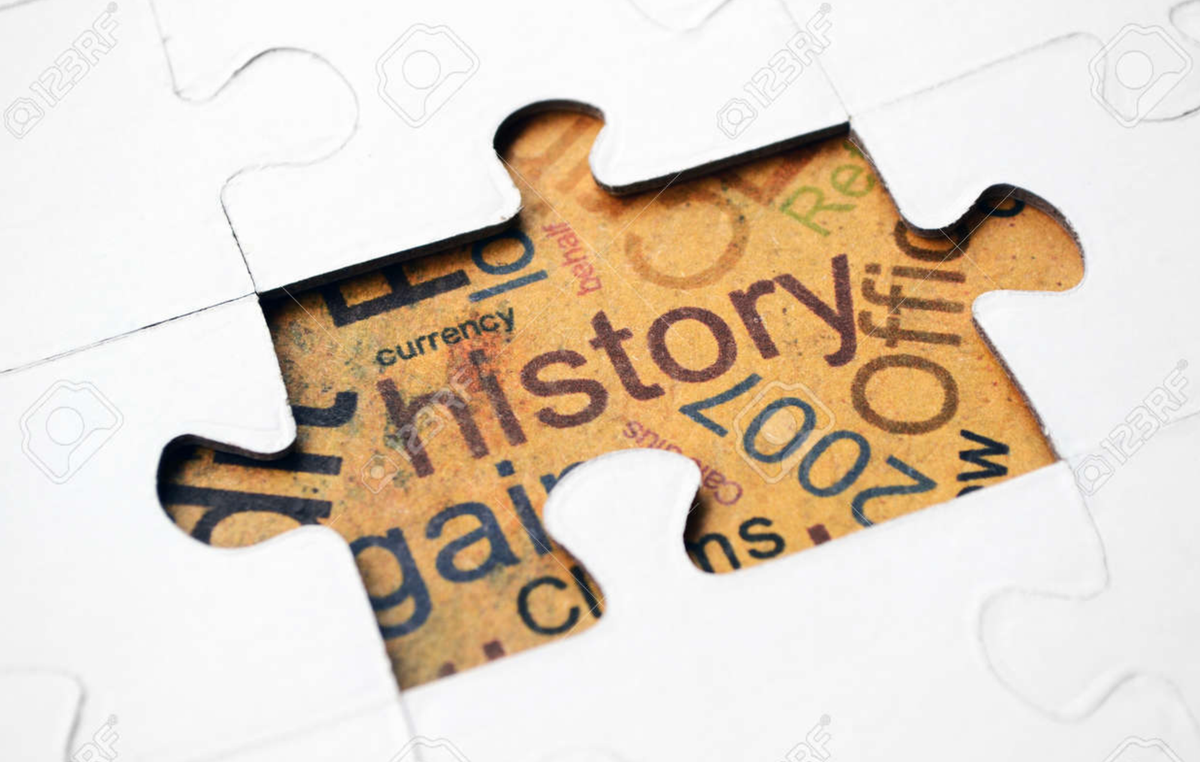
Researching and writing History, I discovered, was just like putting together a jigsaw puzzle – except the pieces were scattered across the country and there was no cover image on the box to tell me what picture I was supposed to find in the end. Instead, I got to discover the picture on my own, to shape the picture itself, and then got to tell people about it? Amazing.
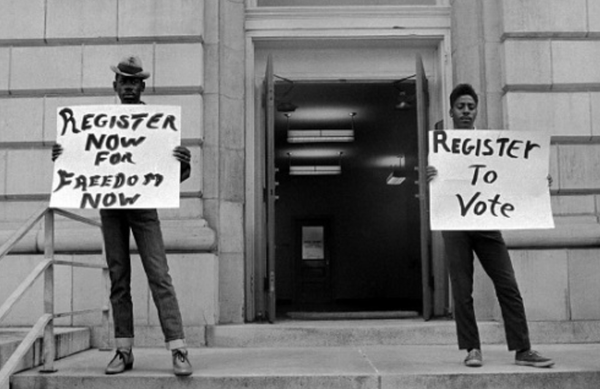
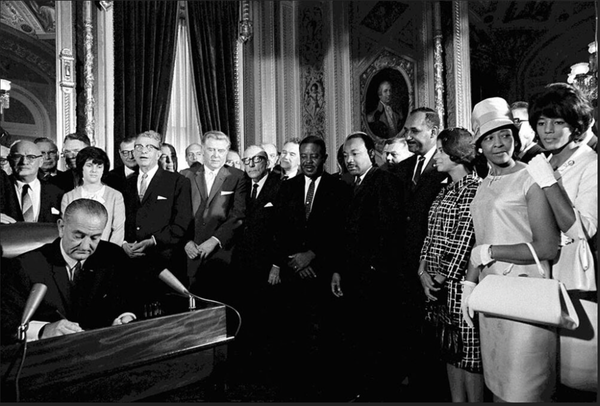
And not only was History something that fit well with my interests and skills, I learned that I could put those interests and skills to use trying to understand my world better and to help other people understand it. Growing up in the South, I had always been drawn to the civil rights struggle which fascinated me and the conservative movement which frustrated me. History gave me a way to put my hands around both issues, to make sense of them for me and for others.
And when that basic point finally clicked – the realization that the things I always loved doing as a child and a career that might actually matter as an adult were, in fact, one and the same – it was amazing.
So why am I a historian? Because I was a kid who loved solving puzzles and what better puzzle than (gestures broadly)?
Anyway.
Happy Labor Day, everyone.