Rethinking the Civil Rights Movement
Last night I gave this talk to the Princeton Adult School about the connections between the civil rights movement of the 1960s and similar struggles in our own time, pulling together a few things I've written about in the past and packaging them for a general audience. I thought I'd send it out here in case others were interested. (Wish I had a transcript of the Q&A because that was terrific too.)
When we consider the most important chapters in modern American history, the modern civil rights movement is somehow both the best-remembered and worst-remembered of them all.
It’s the best remembered in the sense that the movement looms incredibly large in our national memory and public consciousness.
There have been countless celebrations of the heroes of that struggle, in best-selling books like Taylor Branch’s Parting the Waters trilogy, in popular documentaries like PBS’s award-winning Eyes on the Prize series, and in movies like Selma or Rustin. There’s likewise been an emphasis on celebrating the sacrifices of civil rights icons in our schools – my kids were doing reports on Rosa Parks in the second grade in the Princeton public school system, for instance.
And of course, in the highest sign of our public celebration of the civil rights movement, we have a federal holiday devoted to Martin Luther King Jr. And while the creation of that holiday was controversial, today it’s become something that politicians from across the political spectrum recognize in public.
But despite all these public celebrations – or perhaps because of them – the civil rights movement might also be the worst remembered chapter in American history. Nothing shaves away the nuances and complications of the real historical record like its celebration.
Through a combination of innocent nostalgia and more malicious efforts to deceive, the public memories of the civil rights movement have taken a complicated and convoluted struggle and repackaged it as short, simple and, above all, successful.
It is short in that we’ve reduced a generations-long struggle that stretched back in time to the 19th century and extended into the 21st to just a single decade or so over the late 1950s and early 1960s. Historians often call this limited view of the civil rights struggle the “classical” vision of the movement. Others call it the “Montgomery to Memphis” arc, as it largely follows the public career of Martin Luther King, Jr., from the Montgomery bus boycott in 1955 through his assassination in Memphis in 1968. Still others call it the “Eyes on the Prize” arc, in testament to how influential that PBS documentary series of the 1980s was. But whatever the name, the sense that the civil rights movement was confined to a short window of time is what matters.
On a related note, the classical understanding of the civil rights movement is one that presents the demands of the movement as simple. The movement itself was composed of a constellation of various actors who ranged from conservative institutionalists to liberal reformers to socialist and even communist radicals. The issues they campaigned for were complex and even contradictory as a result.
But in our public memory of the movement, all that chaos has been swept away to focus solely on the matter of racial segregation. This becomes clear every MLK Day, when a steady stream of Republican politicians quote the one and only line from MLK they can remember, the passage from the “I Have a Dream” speech in which he said he hoped one day his children would be judged by the content of their character instead of the color of their skin. That’s a narrow version of King and a simplistic version of the movement he led that is widely palatable to Americans from a wide variety of backgrounds.
And that, in turn, leads to the most important part of our public memory of the civil rights movement: the fact that it was successful.
By focusing narrowly on the fight against segregation – specifically, the fight against the laws and statutes that upheld official racial segregation in the public sphere – the story of the civil rights movement is one that ends in unequivocal triumph. Thanks to the inspiration and direction of King and other activists, the Civil Rights Act of 1964 and the Voting Rights Act of 1965 ended racial segregation and voting discrimination as well.
King’s assassination, in this view, only adds a proper note of pathos to the story. Racism was America’s original sin. King sacrificed himself to remove that sin, and with his sacrifice, all of our sins were washed away.
Taken together, this widely held view of the civil rights movement as short, simple, and successful has helped cement the movement’s place in public memory and national memorials. And I should stress I’m wholly in favor of that.
But we should still recognize that the triumph of that interpretation has a downside. We’ve reduced the civil rights movement to a caricature – a generally positive caricature, but a caricature all the same – and we’ve placed it high on a pedestal. We’ve made it difficult if not impossible to hear the echoes of the civil rights movement in our own day and, as a result, we’ve made it extremely difficult to replicate its work in our own world.
And so tonight I’m going to talk about the realities of the civil rights movement and discuss the ways in which it can and should still speak to us today.
For starters, one thing we have to remember is that the classical civil rights movement that virtually all Americans embrace today was, in its own time, incredibly divisive and often deeply unpopular.
We rightly remember the civil rights activists of the 1950s and 1960s as heroes, but at the time most Americans saw them as troublemakers.
President Dwight D. Eisenhower is a good example. He always understood the cause of civil rights as a divisive political issue that would only tear the country apart. When the Supreme Court handed down the Brown decision, the president fumed that appointing Earl Warren to be Chief Justice had been “the biggest damfool mistake I ever made.” White House aides encouraged the president to drum up public support for the landmark ruling of the court, but Ike refused to give a speech in the Oval Office or tour the South urging compliance. He avoided the issue for three years, until the defiance of segregationists in Little Rock forced his hand. But he hated doing even that and refused to repeat the act.
Instead of siding with civil rights activists, Eisenhower treated them as most moderate whites treated them – as extremists on the left. The president, like many other white politicians, struck a pose in the 1950s of condemning what he called “the extremists on both sides” – and by that he meant the Ku Klux Klan on the far right and the NAACP on the far left. He equated racist redneck terrorists who were willing to kill in subversion of the rule of law with careful lawyers who merely called for the law of the land to be enforced. “Both sides” were challenging the status quo, and that was a problem.
The hands-off approach of Eisenhower created a national vacuum on the issue, one that segregationist politicians rushed to fill. The results were disastrous. As the NAACP leader Roy Wilkins remarked at the time, “President Eisenhower was a fine general and a good, decent man, but if he had fought World War II the way he fought for civil rights, we would all be speaking German today.”
But it wasn’t just Eisenhower who recoiled from civil rights activists and their cause. At the same time, Adlai Stevenson, the Democratic presidential candidate who challenged Ike in both 1952 and 1956, barely differed from him. The white South, he said, should be "given time and patience" on the matter. The federal government should stay above the fray, he said. Before the 1956 campaign, he was booed before a black audience in Los Angeles for saying that "we must proceed gradually, not upsetting habits or traditions that are older than the Republic."
While Americans today widely celebrate the Brown decision and the desegregation of public schools as an unqualified good, even that aspect of the civil rights movement was wildly condemned as a radical program.
Segregationists denounced the civil rights movement as a communist plot that had been designed to sow chaos and confusion across the United States. This had already been pronounced during the heyday of McCarthyism in the early 1950s, when anticommunists seized on the Soviet Union’s lip service to racial equality and asserted that anyone who also supported racial equality must therefore be a communist. I mean that literally. As the chairman of Washington state’s committee on un-American activities said at a hearing, “if anyone suggests there is some kind of discrimination against Negroes in this country, then there’s every reason to believe that person is a communist.”
Segregationists amplified these charges. They put up billboards showing MLK and Rosa Parks at the Highlander Folk School, a social justice school in Tennessee, but the billboards claimed it was a Communist Training Center. Likewise, they denounced the NAACP as a communist front. The magazine of the segregationist White Citizens’ Councils, for instance, had a cartoonist who always depicted the NAACP as a crook whose pants had been pulled down to reveal boxers emblazoned with hammers and sickles.
More seriously, southern states acted on the president’s line that the NAACP was no different than the Klan by treating the civil rights organization as a terrorist group itself. Many states enacted new laws that harassed NAACP lawyers and the black parents who were brave enough to bring lawsuits for school desegregation. The state of Alabama went so far as to outlaw the NAACP entirely.
The white South was the most hostile to the work of school desegregation, but the nation as a whole was deeply divided. Support for the Brown decision was barely above 50% in 1954, and the numbers barely budged over the decade. When segregationists drew a defiant line in the sand in Little Rock in 1957, only 51% of respondents thought the desegregation plan should proceed as planned.
And again, this was just the reaction to school desegregation. When the civil rights movement made more aggressive challenges to segregation and discrimination in other spheres, the hostile reaction across the rest of the nation was even more pronounced.
For instance, the public memory of the civil rights movement today celebrates the bravery of those in the early 1960s who directly challenged racial segregation – the sit-ins of 1960, which challenged the segregation policies of private businesses, and the freedom rides of 1961, which challenged the segregation practices of public transportation.
But again, at the time, these campaigns were deeply unpopular. In May 1961, Gallup asked Americans if they thought the sit-ins and freedom rides would “help or hurt the Negro’s chances of being integrated in the South.” A whopping 57% said these civil rights campaigns would hurt their chances while just 27% thought it might help.
In the popular narrative I mentioned at the start – that Montgomery to Memphis one – there’s a general assumption that 1963 represented a turning point. Many people assume that the dramatic protests in Birmingham in the spring and the March on Washington in the summer marked a massive change in public opinion.
But, if anything, those public protests only deepened the sense that these protests were dangerous and divisive.
Again, look at the Gallup polls here. In June 1963, after the successful conclusion of the Birmingham campaign, Gallup asked “Do you think mass demonstrations by Negroes are more likely to HELP or more likely to HURT the Negro’s cause for racial equality?” Only 27% of Americans said they thought demonstrations helped the cause; a whopping 60% said they hurt.
Surely this changed after the March on Washington, right? Nope. It only got worse. When Gallup polled on that exact same question in May 1964 – in the afterglow of the March on Washington, with Congress nearing passage of the Civil Rights Act – only 16% of Americans said that demonstrations helped the cause of racial equality, while a staggering 74% said it hurt.
Not even the passage of the Civil Rights Act and the Voting Rights Act, or the dramatic protests in Selma and the Selma-to-Montgomery March would change this.
A poll in February 1965, asking about the Civil Rights Act, found that twice as many Americans thought the government was moving “too fast” on civil rights as thought it wasn’t moving fast enough.
Indeed, as the civil rights movement racked up its biggest successes, white Americans increasingly recoiled from it. In 1966, before the advent of Black Power and the wave of urban riots that rocked the nation, polls showed that just a third of white Americans thought MLK was “helping the cause” of racial equality. 72% of whites had an unfavorable opinion of him. 85% of whites now thought demonstrations “hurt the advancement of their cause,” while even 30% of African Americans agreed.
I’m sorry to bombard you with all these polls, but I think they’re the clearest way to explain what the Yale historian Glenda Gilmore has called the myth of the “good protest.”
The myth of the civil rights movement as the “good protest,” she has explained, begins with the assertion that the movement of the 1960s was broadly popular, in direct contravention to all those polls. But it goes beyond that, as contemporary pundits then insist that the movement was popular because its goals were limited – the desire of blacks to gain entrance to spaces that were once white-only, and nothing more – and its tactics were not disruptive.
That false picture of the classical civil rights movement of the 1960s – popular, limited, unobtrusive – is then used to discredit the civil rights movements of our own day. New protests are held up against the gold standard of the “good protests” from an imagined golden age and, invariably, they are found wanting. And because of that bad historical comparison to the old movement, the new movements aren’t seen as a legacy or a continuation of the classical era of civil rights protest, but rather as a deviation or a rejection of it. That’s ludicrous.
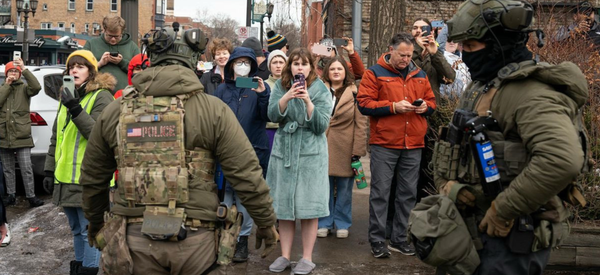
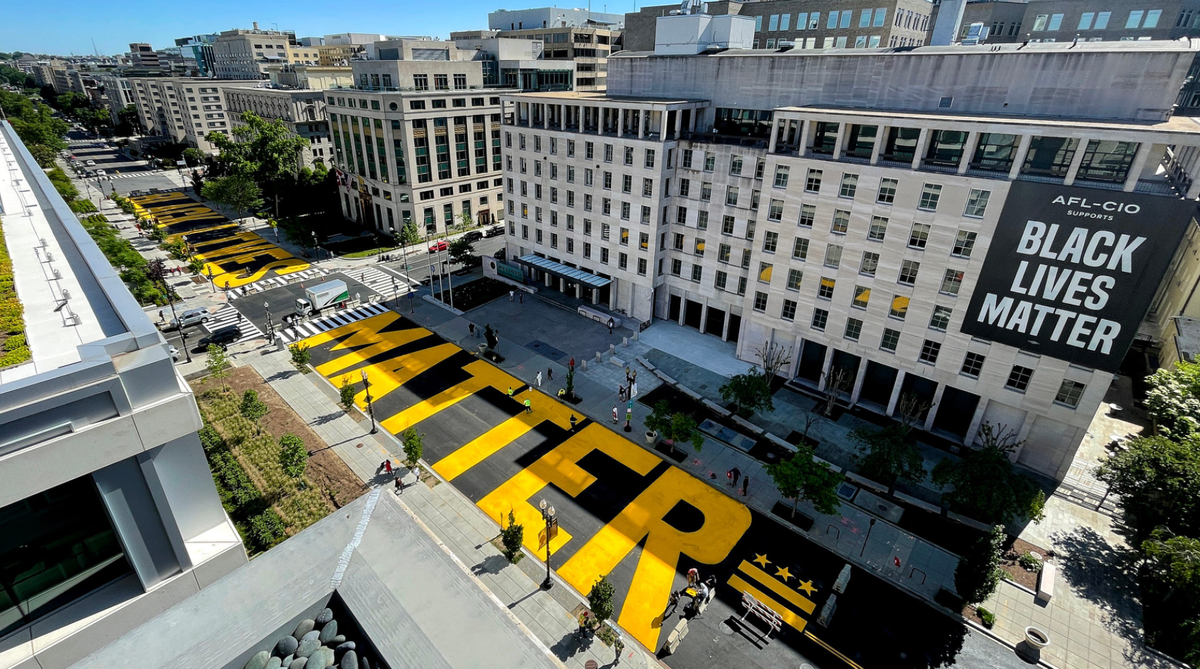
We saw this, most recently, with the Black Lives Matter protests a decade ago and then again with the protests in the summer of 2020 after the murder of George Floyd in Minneapolis.
During both of these waves of public protest, activists faced public criticism that they were deviating from the norms of the classical civil rights movement. Sometimes these comments came disingenuously from their ideological opponents, but other times they came from their purported allies, people who said – as Minnesota’s Attorney General Keith Ellison – that they supported the goals of Black Lives Matter but not the tactics they were using to reach them: disruptive protests in the streets.
And again, they held up the classical civil rights movement as an alternative model, one the activists of our own time needed to follow. Ellison criticized activists in Minneapolis for setting up an encampment and when he was criticized in return for that, he tweeted: “Please read Letter From Birmingham Jail. MLK didn’t just sit on Edmund Pettus Bridge. Moved to 1965 Voting Right Act.”
The irony here is that Ellison himself doesn’t seem to have read Martin Luther King’s Letter from Birmingham Jail. That letter was King’s forceful rejection of moderates in his own time who insisted that they too agreed with the larger goals but didn’t like the chosen tactic of public protests.
King and other activists understood that protests were an essential part of their work. While they engaged in courtroom litigation and political lobbying, they knew that both of those efforts depended on the more important work of non-violent direct action campaigns.
We should remember that civil rights activists called their protests “demonstrations” because the entire goal was to demonstrate to the rest of the nation the hypocrisy of southern talk of “law and order,” the ugliness of white supremacy, and the unfairness of Jim Crow society.
The white ministers in Birmingham urged King to call off these demonstrations and instead engage in negotiations. “When rights are consistently denied,” the ministers argued, “a cause should be pressed in the courts and negotiations among local leaders, and not in the streets.”
King reminded them that the two had to go together. “You are exactly right in your call for negotiation,” he wrote. “Indeed, this is the purpose of direct action. Nonviolent direct action seeks to create such a crisis and establish such creative tension that a community that has constantly refused to negotiate is forced to confront an issue.”
Because the leaders of Birmingham had refused to negotiate – and, in the case of "Public Safety Commissioner" Bull Connor, even assaulted them – King noted that civil rights protesters had no alternative to direct action campaigns “whereby we would present our very bodies as a means of laying our case before the conscience of the local and national community.”
King’s letter sought to persuade white moderates that their calls for gradual change through the courts and Congress were counterproductive, to bring them around to supporting the direct action protests of the movement. But as I noted earlier, whites were largely opposed and became more so every year.
In our own time, the Black Lives Matter protests have been almost as polarizing.
For the most part, polls have shown just over 50% support for BLM protests since 2017, with a brief bump up to 65% in the summer of 2020 after the murder of George Floyd. More alarming, these polls show that just 7% of Americans – just 7%! – thought that the BLM protests would help solve the problems they were challenging, while a whopping 61% said they would in fact make things worse.
That’s a bit surprising, as the nation’s attitudes on race relations, racism and civil rights have changed quite a bit in the last half century. MLK is now revered – a recent poll of high school seniors and juniors asking who was the greatest Americans in US history ranked MLK first and Rosa Parks second – and the protests he led have been enshrined as the gold standard. But the non-violent direct action protests that could easily be seen as the legacy of the classical civil rights movement have been compared not to the actual movement that King led, but to the idealized “good protests” we have imagined.
It’s not just tactics that the contemporary fight for civil rights has in common with the classical struggle. The goals sought are the largely the same.
Consider the recent fight over Critical Race Theory.
Critical Race Theory, or CRT, has been a fairly standard approach in legal studies since its introduction the 1970s and 1980s. But its central idea – that laws and legislation might appear to be racially-neutral on the surface and yet still have intended or unintended racial disparities in their application or execution – is one that stretches back to the 1870s and 1880s, well before the classical civil rights movement even began.
And while white conservatives today angrily deny that there are any racial disparities in our legal system, this was something that white conservatives didn’t just acknowledge in the Jim Crow era but actually bragged about.
In 1915, a white lawyer in Mississippi named Sidney Fant Davis published a guide intended to instruct new arrivals in how the laws worked in the Jim Crow South. Any lawyer coming to the South, Davis said, had to be familiar not only with the common law, the civil law, and the statutory laws, but also with what he called the "negro law." By "negro law," he meant the racial double standard that Critical Race Theory would later highlight. As Davis put it: "The judges, lawyers and jurors all know that some of our laws are to be enforced against everybody, while others are to be enforced only against the negroes."
If a white man killed a black man, Davis offered as an example, he might not even be brought to trial. And if he were, he could generally get off with a light sentence or no sentence at all. On the other hand, if a black man killed a white man, he would definitely suffer death "in some form or other, with the time, place and manner of his execution depending altogether on who caught him, the sheriff's posse or the friends of the deceased."
Activists had hoped that the civil rights laws of the 1960s would wipe away this double standard of justice, but of course, it only continued to proliferate.
When Richard Nixon launched the “War on Drugs” in 1971, the entire program was designed as a way to crack down on the administration’s enemies. As his chief domestic aide John Ehrlichman explained in a 1994 interview, “We knew we couldn’t make it illegal to be either against the war or black, but by getting the public to associate hippies with marijuana and Blacks with heroin, and then criminalizing both heavily, we could disrupt those communities. We could arrest their leaders, raid their homes, break up their meetings and vilify them night after night on the evening news. Did we know we were lying about the drugs? Of course we did.”
Indeed, you can just stick with the history of the War on Drugs to see the way this legal racial disparity played out. Black drug users found themselves targeted for greater rates of incarceration as the government decided to impose harsher penalties for drugs they tended to use more – making crack cocaine used by many poor blacks carry a larger prison sentence than the same amount of powdered cocaine used by many white elites, for instance. Meanwhile, as the historian Matt Lassiter has just shown in a new book, the government pretended that white drug users were actually the victims of “drug pushers” who, once again, were seen as racial minorities.
As legal scholars tried to reckon with this persistent racial discrepancy, they created Critical Race Theory as a way of articulating something that had been in civil rights discourse for more than a century.
And again, it was a fairly conventional and noncontroversial school of thought until recently, when white conservatives seized on it and once again tried to contrast it with their distorted picture of the classical civil rights movement.
Consider Senator Ted Cruz of Texas. Cruz is a Harvard Law School graduate who took classes with some of the most prominent scholars in the field, who surely tried to explain it to him. And yet, in an act of political pandering, Cruz has pretended that Critical Race Theory is something different entirely, not an attack on racism but a call for a new kind of racism. At a 2021 event, he shamefully insisted that Critical Race Theory was “every bit as racist as the Klansmen in white sheets.”
To say this is nonsense feels painfully obvious. The Klan’s ideology began with the premise that racial differences were an obvious biological and scientific fact and that all human activities had to be organized around that fact; critical race theorists take as their starting point the belief that race is a fiction, an invented concept that has no basis in biology or science.
The Klan worked to put its racist beliefs into action through Jim Crow laws in the South and immigration restrictions for the nation as a whole; critical race theorists have devoted themselves to identifying the remainders of that racism in the law and rooting it out.
And, most obviously, the KKK was a terrorist organization responsible for decades of white supremacist violence that included thousands of murders, mutilations and bombings of African Americans and other minorities. The law school professors behind CRT … are not.
Despite the vast differences between the Klan and critical race theorists, Cruz twisted himself into knots insisting they were the same by grossly misrepresenting the scholarly field. “Critical race theory says every white person is a racist,” the senator lied. “Critical race theory says America’s fundamentally racist and irredeemably racist. Critical race theory seeks to turn us against each other and if someone has a different color skin, seeks to make us hate that person.”
Cruz offered no evidence for these claims, because there is none. Far from arguing that individual white people are all racist, critical race theorists assert that focusing on the actions of individuals is meaningless because racism is more deeply rooted in larger structural and systemic problems.
Rather than believing America is “irredeemably racist,” critical race theorists have said quite clearly that their reckoning with the submerged role of racism in America is a path to redeem the nation and fulfill the promises of emancipation and the 13th, 14th and 15th Amendments. Critical race theorists also do not seek to turn Americans against each other, but rather to help them understand the actual history of the nation they share as citizens.
The opponents of Critical Race Theory, however, have been ignorant of all that. Shortly after Ted Cruz’s attack on CRT, the Texas state legislature moved to ban the teaching of CRT from all schools in the state.
The author of the bill, Republican State Rep. Steve Toth, insisted that the bill was wholly in keeping with the vision of Martin Luther King Jr. “It echoes Dr. King’s wish that we should judge people on the content of their character, not the color of their skin,” he told a reporter.
This talking point is apparently the new Republican orthodoxy. At a campaign rally in 2020, Donald Trump claimed that “critical race theory is a Marxist doctrine that rejects the vision of Martin Luther King Jr.” Florida Gov. Ron DeSantis likewise asserted that critical race theory was “basically teaching kids to hate our country and to hate each other based on race,” adding: “It puts race as the most important thing. I want content of character to be the most important thing.”
In making such comments, Republican officials reveal that they don’t really understand critical race theory — and don’t really understand Martin Luther King Jr., either.
If we want to see how wrong those are who see MLK and critical race theory as diametrically opposed, we should look no further than two iconic moments that the Texas law specifically encouraged teachers to teach as an antidote to CRT: Martin Luther King Jr.’s ‘Letter from a Birmingham Jail’ and ‘I Have a Dream’ speech.
Yes, in his landmark address at the March on Washington, King did note his hope that “one day” his children would be judged by their character and not the color of their skin, but we have to remember that was a hope he expressed for the future. More important, that was only one line in a much more nuanced address.
While King looked ahead to that day, his vision remained firmly fixed on the realities of racism and discrimination in his own time; he devoted the bulk of his address to identifying and articulating them. King chronicled the ways African Americans faced systemic patterns of discrimination and inequality, from “the unspeakable horrors of police brutality” to the discriminatory public and private policies that put African Americans on “a lonely island of poverty in the midst of a vast ocean of material prosperity.”
“We’ve come here today,” King patiently explained again, “to dramatize a shameful condition.”
In his famous Letter from Birmingham Jail, which he wrote four months before the March on Washington, King had already sounded out these same things, in greater length.
The letter, which again was King’s response to chiding from moderate whites, patiently explained that the first “basic step” in his activism was the “collection of the facts to determine whether injustices exist.”
Asserting that “privileged groups” fail to see how others often lack the same privileges and therefore dismiss their complaints, King rattled off for them — and us — a litany of the systemic and structural inequalities that faced African Americans, including police brutality, voting discrimination and an unequal economy that locked “the vast majority of your 20 million Negro brothers smothering in an airtight cage of poverty in the midst of an affluent society.”
Notably, King spent a great deal of the letter outlining how “the unjust law” — which he defined as “a code that a numerical or power majority group compels a minority group to obey but does not make binding on itself” — worked to prop up racial and economic inequalities. The racist intent or racial impact of such legislation might not be overt, King noted. “Sometimes a law is just on its face,” he wrote, “and unjust in its application.”
That's basically Critical Race Theory in a single sentence.
The same thing is true of the assault on programs of Diversity, Equity and Inclusion, or DEI.
This one is a little different, because unlike Black Lives Matter and Critical Race Theory, DEI wasn’t something that really came from activists. Instead, it came from a combination of government standards and, even more important, corporate self-interest. In an effort to meet the demands of their customers and broaden their consumer appeal, some corporations adopted DEI policies over the last decade. A few involved actual hiring preferences and other measures meant to improve the substance of their work, but more often they were merely gestures meant to signal their general values of inclusion. Something akin to sporting a gay pride flag.
But conservative activists targeted DEI as something more pernicious, as an extension of affirmative action quotas which had previously been struck down by the Supreme Court. And once again, they invoked a distorted vision of the civil rights movement in general and MLK in particular to make their case.
Conservative legal activist Ed Blum, for instance, said his lifelong fight against affirmative action and DEI policies was inspired by the one line conservatives seem to know from the “I Have a Dream Speech.” “Americans of all races wholly understand that Dr. King’s most enduring line from his ‘I Have a Dream’ speech means that an individual’s skin color should not be used to help, or harm, them in their life’s endeavors,” Blum told CNN. “Dr. King’s quote means that affirmative action is polarizing, unfair and illegal,” he added.
This one is especially galling, because we don’t actually have to speculate about what MLK might have thought about affirmative action policies, because those policies were first created when he was still alive. He wrote about them, quite favorably.
In 1965, when LBJ was considering launching affirmative action programs by executive order, the author Alex Haley asked King if he thought it was fair “to request a multimillion dollar program of preferential treatment for the Negro, or for any other minority group?” King’s answer was unequivocal. “I do indeed,” he said. “Can any fair-minded citizen deny that the Negro has long been deprived?”
Likewise, in his 1967 book Where Do We Go From Here? Chaos or Community, the final book he published before his assassination, King gave his full support to the affirmative action programs. As he reasoned there, "a society that has done something special against the Negro for hundreds of years must now do something special for the Negro."
The last point I want to make tonight before we open it up for discussion is that the success of the classical civil rights problem – or its perceived successes, anyway – is also a bit of a stumbling block when it comes to new movements seeking to build on its accomplishments.
And to be sure, the accomplishments of the civil rights movement were incredible. Their campaigns of direct action helped open up Jim Crow society and secure the passage of the Civil Rights Act of 1964, which would be a foothold not just for further gains for racial minorities but for other groups – women, gays and lesbians, the disabled, etc. And their demonstration of the sad state of Jim Crow democracy ushered in the Voting Rights Act of 1965, a truly revolutionary measure that transformed the United States into a full and complete democracy for the first time in its history.
That’s an impressive record, and it’s understandable – when coupled with the public celebrations of the civil rights era – that Americans see the civil rights struggle as an unqualified success. They took on segregation and segregation lost.
This attitude is quite widespread. A Gallup poll in 2008 showed that nearly 90% of Americans believed that protesters during the civil rights movement had “achieved some or all of their goals.”
That’s an optimistic assessment, one made during Barack Obama’s successful run for president as the first black candidate of a major party. But it’s one that implies there’s nothing more to do in the realm of civil rights. All the problems were settled long ago.
But once more, if we look back at the real activists and not just the ones that exist in our national imagination, we can see that they themselves believed that their movement had not come close to fulfilling all its goals.
Again, we can just stick with Martin Luther King Jr here. In August 1967, he delivered what would turn out to be his last presidential address to the Southern Christian Leadership Conference. Despite the assembled activists’ many accomplishments in their struggle for racial equality, King reminded them that they still had considerable work to do – especially in their struggle for economic justice.
40 million poor people still lived in America, he told them. And it was their responsibility as Christians, as citizens and as civil rights workers not simply to take care of the poor but to confront the economic system that had allowed them to be poor. “We’ve got to begin to ask questions about the whole society,” the minister asserted. “We are called upon to help the discouraged beggars in life’s marketplace. But one day we must come to see that an edifice which produces beggars needs restructuring.”
Hoping to rouse the country to action against this evil—an evil that, in his eyes, was even more entrenched than racism—King urged his listeners to reject their sense of self-satisfaction and instead to be filled with what he called a “divine dissatisfaction.”
“Let us be dissatisfied,” he said, “until the tragic walls that separate the outer city of wealth and comfort from the inner city of poverty and despair shall be crushed by the battering rams of the forces of justice. Let us be dissatisfied until those who live on the outskirts of hope are brought into the metropolis of daily security. Let us be dissatisfied until slums are cast into the junk heaps of history and every family will live in a decent, sanitary home.”
King hoped to tackle these issues himself with the Poor People’s Campaign he planned to lead in 1968, but his assassination ended those plans and stunted that campaign. The problems he urged civil rights activists to tackle still exist, of course, as does the call to action itself.
The idea that the civil rights movement achieved all its goals – the idea that it ended at all! – is contradicted by the words, deeds and most of all, the plans of activists themselves. They knew the work would go on and they would be horrified by anyone who implied there was nothing left to do.
The civil rights movement isn’t history, confined to the past. It’s still part of our present and, I hope, our future.
SOURCES:
Lindsay Bever, "Politicians Blamed 'Both Sides' During the Civil Rights Movement," Washington Post
Civil Rights Movement Archive, Public Opinion Polls
Mark Engler and Paul Engler, "MLK Was a Disruptor," Salon
Glenda Gilmore, "The Good Protest" in Myth America
Kevin M. Kruse, "Lost Causes Not Yet Found," The Nation
Pew Research Center, "Mixed Views About Civil Rights ..."
Roper Center, Historical Data on Public Opinion and Black Americans